Showing posts with label children. Show all posts

Wednesday, May 10, 2023

Pokemon and Jesus


There are somethings I know way more about after becoming a parent than I ever would have guessed I would know about. And I'm not talking about how to change diapers or help with math homework. I'm taking about things like names of dinosaurs for every letter of the alphabet, the backstories of obscure Marvel superheroes or why the My Little Ponies each have a 'cutie mark' on their butt.

I also know a little something about Pokémon. Now, of all the kid pop-culture things that I know about, Pokémon is actually sort of low on the list. But I didn't know anything about it before kids. And as I was reflecting on the relationship between God and God's people this past week, my mind made a Pokémon connection.

When Mary receives the news that she is going to be the partner to God in bringing Jesus into the world, she proclaims God's favor. When Jesus announces the beginning of his ministry, he too proclaims God's favor. Quoting from the prophet Isaiah her says, "God has sent me to proclaim liberty to those held captive, recovery of sight to those who are blind, and release to those in prison - to proclaim the year of our God's favor."

The thing about being favored is, you might think that it's about getting lucky. And for sure, the people who are being release from captivity probably do feel pretty lucky. But really, the thing or person that's the favorite, is the thing that you keep going back to again and again. Your favorite shirt is the one that you're always happy to pull out of the clean laundry. Your favorite ice cream is your default because you know for sure you won't be disappointed. The teacher's pet (ie. favorite) is the one who always gets called on.

Here's the Pokémon connection. Pikachu is Ash's favorite. (Isn't he everyone's?) For those who aren't familiar, Ash is Pikachu's trainer. Each trainer works together with their Pokémon to battle with other trainers and their Pokémon. Even though Ash has others, Pikachu is the one he always calls on: "Pikachu," he famously declares, "I choose you!"

It's not just Mary and not just Jesus who are God's favored ones. They are part of a favored people and we too are each God's favorites. "I choose you!" God is saying to us even now. What is our response? Obviously not battling our beings with our phenomenal lightening powers. The clue is in Mary's song and Jesus' proclamation. Being God's favored ones means entering the training to bring release to the captive, food to the hungry, lifting up the lowly. Being God's favorite doesn't mean the easy life, but it does mean that God will continue to call on and choose us to be God's own.

All of this might just go to show that a pastor can bring anything back around to Jesus. But may you never see Pikachu the same way again.


Thursday, December 01, 2022

The Best Christmas Pageant Ever


This week many of you are preparing to film scenes for our video Christmas pageant. Maybe it was because I've been coordinating this year's pageant project that I picked up our old copy of The Best Christmas Pageant Ever by Barbara Robinson. I wasn't sure if it would be as great as I remember from when I was Orie's age. But folks, it holds up!
It is seven-year-old approved. It is so fun to read out loud and to giggle together at the antics of the Herman herd. (And so much better than reading Capatain Underpants again). The Herdman kids are known in their town for being bullies and agents of chaos. One Sunday the five siblings show up at church because they've been told that there'll be cake. Much to everyone's dismay they also all volunteer to be in the Christmas pageant. There's only one problem: they've never even heard the Christmas story. This fish-out-of-water situation leads to comedy and also to some eye-opening insight into a familiar Biblical story.

There is so much to love about this book. Above all, I love that it's so silly but still takes its characters and the story seriously. Orie keeps talking about how Imogene thinks Bill would have been a much better name than Jesus for Mary's baby.

I love both the questions and the pronouncements made by the Herdmans as they discover the Christmas story for the first time. They "wanted a bloody end to Herod, worried about Mary giving birth in a barn and called the wise men were a bunch of dirty spies."

I love all the characters, even prissy Alice Wendelken, who thinks she should have gotten the part of Mary but is too scared of Imogene to put up her hand, so instead she's taking notes of all the sins the Hermans are committing so she can tattle.

I love the way the haters are put in their place. The mom who's making the best of being stuck with leading the pageant shows up the stuck-up church ladies who think the Hermans will ruin everything. She determines that this pageant whiche everyone thinks will fail will be the best Christmas Pageant ever. And it is!

There are only a couple of asterisks I would put on my very hearty recommendation. I skipped over a couple of fat-phobic paragraphs of bullying by the Herdmans in the first chapter. And I was annoyed at the multiple mentions of a dad who's resigned to the fact that dinner's never ready for him because the mom is spending so much time working on the pageant. I mean, maybe you could make her dinner, buddy. She's got a lot on her plate. If they ever do an updated edition, these would be super things to fix.

For me, those small details aren't worth leaving the book on the shelf. I hope you read it and tell me what you love about it. And I hope you come to church on the 18th to see our own kids and families in our non-traditional but still great Christmas Pageant.

Wednesday, November 09, 2022

I Object: Saying No to Violence and War


As I was putting the finishing touches on the outline for the youth workshop on militarism and non-violence, I heard about the fatal shooting at Ingraham High School. Two beloved members of our community were in the building. Several of our families over the years have had students at Ingraham. Many of our faith family live in the neighborhood. A student was killed by another student.
 
I'm sure you, like me, had the sinking, awful, scared, not-again feeling in your guts. Maybe you, like me, shed tears of grief and rage. Grief that young people continue to be endangered by their own peers with firearms, grief at the loss of life and devastation to a family, grief for the students and staff traumatized by witnessing this event, and others who will not know how to walk back into this place that has been violated, grief for the hearts of the young persons who turn to lethal violence, and absolute rage at a system and government and nation whose obsession with militarism and individual freedom continues to cause these griefs.

Everything - EVERYTHING - that Jesus taught and lived was an embodied objection to the militaristic and violent practices of empire. He grieved and got angry about it too! And yet he even rejected the violence of those whose anger let them to rebel against their oppressors with force. We, his followers, are called to raise our voices in objection as he did.

It's one of the reasons that I feel like the crash course I'm offering for youth on conscientious object is still relevant, even though it's been literal decades since young people have been called up by military draft. It's all connected. The same individualistic, militaristic culture that spends half its discretionary budget on "defense" is the culture which infects the hearts and minds of people - young and old - such that they wield a gun against a fellow human.

This morning after election day I am absorbing the news with some relief that the "red wave" has not been as overwhelming as some predicted. But democrats are not going to save us from gun violence. They are not going to save us from militarism. We can, though continue to object. To cry out. To learn to articulate our opposition to violence that is rooted in the call of Jesus and modeled on the action of Jesus.

It is extremely unlikely that any of our youth will encounter a draft board, challenging their stance on war and violence. Even so, I want them to be able to articulate their understandings of war and violence and to demonstrate that they come from a community of faith that supports them when they choose peace. That's why one of the concluding activities of the crash course is to complete a "Peacemaker Registration." It asks them how they've come to their beliefs and to "explain what most clearly shows that your beliefs are deeply held. You may wish to include a description of how your beliefs affect the way you live."

In some ways this last question should convict us all, the grown-ups in the room, for how we live should be rooted in our own deeply held beliefs about the image of God in all humans and all of creation and our commitment to follow Jesus in the way of peace. We are the models for our children. So I am even more determined to object. To keep objecting. And to let this little class be one among many ways that I affirm love over death.

Wednesday, September 07, 2022

A Just Peace Includes Just Labor Practices


I have been looking forward to the routine of school rhythms and to seeing what the new school year would bring for my kids. So, the delay caused by the Seattle Educators Association is frustrating, but it also has me thinking about unions and justice for workers. I think both of my kids are just happy to have a little extra summer break, and don't care much about why, but we've talked a little about what it means to strike, what it means to be a part of a union and why workers - in this case teachers - would choose not to work in order to pressure their employers to make change.

One of my favorite books for talking about collective bargaining is the classic work of literature, Click, Clack Moo: Cows that Type. In it, Farmer Brown's cows go on strike, refusing to provide milk until Farmer Brown meets their demands: electric blankets to keep warm at night. They send their type-written messages through their mediator, the duck. Eventually, the farmer has to capitulate to their requests.

That's a pretty over-simplified version of what it means to unionize. However, I think it makes a pretty good starting place for a conversation with a younger child - or even an older kid who remembers reading it. And it follows the definition for labor unions used by a PBS lesson plan on Labor Day: "an organized association of workers formed to protect and further their rights and interests." In the case of teachers (or nurses or other service workers) strikes are often also in the interests of those they serve, even though service is disrupted in the short term.

I'm not sure how much history or information our children and teens will encounter in their classrooms about the history and importance of labor unions and organizing. Maybe none. And yet many things we take for granted were gains made by unions: eight-hour workday, weekends, child labor laws, workplace safety, and workers’ compensation all came about because of organized labor. In additon to silly books about cows that type, there are lots of more serious options to supplement kids' education. You can find a list of picture books and YA historical fiction that address the ways that organizing here are here, including how children have been involved. You can also learn the pros and cons of unions in one minute from One Minute Economics or hear about how unions have benefitted all workers in this video by Robert Reich.

As for our striking teachers, details of what SEA is asking for in a Washington Education Association chart here. They include just wages for the lowest paid support staff and instructional assistants, especially those in special ed and multi-lingual education as well as caps on class size and caseload. All of which will both be beneficial to the workers and to the students and families they serve. To me, this is an issue of justice for both teachers and the families in our communities who have the greatest need and the highest barriers to learning and involvement.

I plan to support the striking teachers in my neighborhood by signing up on a parent-organized rotation of bringing snacks, drinks and ice to teachers on the picket line. I also wrote to the school board encouraging them to trust teachers when they express the needs of their schools and communities.

How are you engaging? How are you explaining unions, organizing and the teachers strike to your kids. Let me know!

Wednesday, April 20, 2022

Show Your Childfree Friends the Love


I sometimes listen to the podcast "Mom and Dad are Fighting" in which listeners write in to the show's three hosts to answer parenting questions. I subscribe to a few different advice podcasts, though I usually gravitate more toward the comedic. In this case, though, while the hosts Zac, Elizabeth and Jamilah don't take themselves too seriously, (especially when sharing their parenting fails), they do take their listeners seriously. They often agree and support each other but come at parenting with different experiences and perspectives.
In a recent episode, they heard from a person who does not have kids but who wants to support their friends who do. The writer reflected with disappointment and grief their experience of feeling uncared for and unsupported by their friends with children after a big accomplishment in their life. This hurt in a particular way because of the care they have always tried to show their friends and their friends' children. (I mean, this person without kids listens to a parenting podcast!) They wanted to know: is this just their friends? How should they talk to their friends about it?

I immediately thought about the church's history of either wringing out or hanging out to dry people in the church who don't have children. Weird how these two laundry metaphors both get at the way we take our childfree folk for granted, either assuming that because they don't have kids they have all the time and energy in the world for all the church tasks and roles OR planning events and activities only with children and their nuclear families in mind.

I think we do okay in our congregation at not making assumptions about people based on their age and/or life stage. I think we try to be inclusive. But I have had conversations with people in our church who feel like they have not been celebrated in the same way as their peers who are having babies or left out of conversations about aging when their peers are entering empty nest phase. I feel personally implicated. It's too easy to get busy with all the kid stuff and to gravitate to other parent-friends because our paths cross at kids' activities or in the school drop-off line.

If you are a parent, I hope you reach out to someone in your life who doesn't have children to ask what's been up with them lately, celebrate a milestone or offer encouragement. Having people in my own family's life and in our church who do not have kids, whether by choice or by circumstance, is a gift! Beyond the ways these child-free folks share themselves in love and care for us, they model for our children multiple ways of living full, connected, meaningful lives as adults that have nothing to do with raising children. It is so important to name their belovedness.

Elizabeth, Zac and Jamilah of "Mom and Dad" encouraged the letter writer to share their disappointment and hurt directly with their friends. But I hope that our friends and siblings in the church won't have to say something before we let them know how beloved they are in God's eyes and in ours.

Tuesday, December 07, 2021

A Wombat, A Nativity and A Mystery

 I've been pulling from my pile of Christmas stories for use in worship during Advent.  In one of my very favorites Australian animals put on a nativity play.  Wombat is eager to try out for a part.  Not only do we learn that a numbat and a bilby are animals (both - no surprise - marsupials), we see these adorable animals comfort poor Wombat when none of the roles is quite right for him.  Until...they all realize that there's one role that's just perfect.  


Oh. My. Goodness.  This book will definitely make your heart grow three sizes.  Pastor Megan read it on Sunday because I was keeping my coughs and sneezes at home.  You can see that portion of worship on our YouTube channel.
Another one of my favorites for Christmas is The Nativity.  This gem takes the King James Bible version of the nativity story (I edit liberally while reading) and adds Juli Vivas' gorgeous illustrations.  I wrote about it a couple years ago and many of our families received one with their Advent materials last year, thanks to the generosity of Rex and Lenae, who also love it.  If your family didn't get one yet, please let me know!

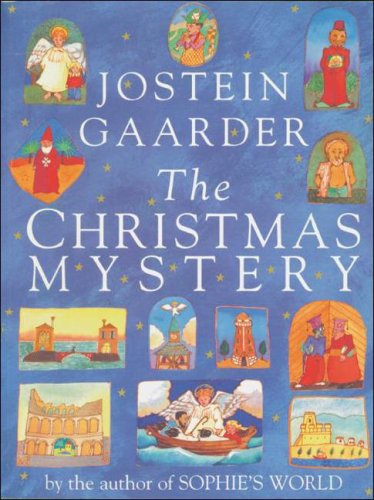
The Christmas Mystery: Gaarder, Jostein: 9781559213950: Amazon.com: BooksFinally, I'm currently on Day 7 of The Christmas Mystery by Jostein Gaarder.  This one's not a picture book, though it does have lovely chapter illustrations by Rosemary Wells, whose style I recognized immediately from the Max and Ruby and Yoko books. In a little bookshop in Norway, Joachim discovers an old advent calendar label "Magic Advent Calendar." Each day when he opens a door he's thrown into the story of another child - a little girl from 50 year ago.  In the company of an angel, a lamb, a shepherd and likely other characters I haven't learned of yet, a little girl named Elisabeth is running backward in time and space to the stable in Bethlehem where Jesus was born. 

I love a story within a story. I love a little magical realism.  I love fiction that takes faith seriously. And I love that at this moment there isn't much that interests both my teen and my six-year-old but so far they're both into it!  The chapters are short, fun to read aloud, and I could totally see this becoming an Advent tradition in our household.  One that's way better than chocolate - however fairly traded it is.  I offer gratitude and appreciation to Cindy Spencer for introducing me to this one. 

A blessing on your Advent reading and other activities.  

Tuesday, November 02, 2021

November: Indigenous Heritage Month


With the beginning of November comes the beginning of Indigenous Heritage Month. It's seeds were sown in 1976 when a Cherokee/Osage politician named Jerry C. Elliott-High Eagle authored Native American Awareness Week legislation. Ten years later, in 1986, the first week recognizing the heritage and cultural significance of indigenous peoples was proclaimed by Ronald Reagan who named November 23-20 American Indian Week. Finally in 1990, George W. Bush named November National Native American Heritage Month.
In worship we adults always acknowledge the Duwamish on whose land we gather. We hope that's language that is become internalized for our children who are present as well as for ourselves. But how else can we engage with indigenous culture and heritage in a respectful way? I went into an internet rabbit hole. The article Celebrating Native American Heritage Month: Do's and Don'ts by Ruth Hopkins (Dakota/Lakota Sioux) has some base-line starting places but I have some more specific suggestions.

Locally, we have such a great resource in the Duwamish Longhouse. You could visit the Longhouse for special exhibit The Spirit Returns or for the native art market on the weekend after Thanksgiving. Or explore contemporary and historical indigenous art at The Burke Museum, where you can also treat yourself to some fry bread at Off the Rez Cafe. (For more about fry bread, I definitely recommend Fry Bread by Kevin Noble Maillard (Seminole). He tells so much history of indigenous people in North American through a fun rhymey book with beautiful illustrations. Follow the link for a video of him reading and talking about it).

Looking for other literature for youth and children I rediscovered the American Indians in Children's Literature blog. Not only does Dr. Debbie Reese (Nambé Pueblo), author of the blog, post her 'Highly Recommended" books for children, she also shares red flags and things to avoid. Her (very long) list of Thanksgiving books to take off your shelf include some that might seem like beloved chestnuts: eg. Charles Schultz's Peanuts crew, Richard Scarry and the Berenstain Bears. Dr. Reese also offers ways to take action with publishers who are distributing books containing harmful images and ideas and so many other resources and tips for choosing kid lit featuring indigenous people.

A couple of authors that I can recommend are Richard Van Camp (Dene) Julie Flett (Metis) Cynthia Leitich Smith (Muskogee) and Louise Erdrich. All of these authors write both about indigenous people in history and about the lives of indigenous people now - combating the myth that somehow Native folks have disappeared and are a part of our history but not our present.

If you'd like to throw your money at indigenous artists and entrepreneurs, visit 8th Generation to purchase their products or see their guide to Native owned establishments and holiday events around Seattle. Check out the curated gift box of indigenous books and products by Raven Reads (they have a specifically kid-focused box), or the gifts boxes or other products by Sweetgrass Trading Company or the subscription boxes by Indigenous Box (I'm seriously considering this for my sister-in-law for Christmas).

If you have ideas or suggestions or practices that honor and recognize First Nations neighbors or Thanksgiving practices that upend the traditional narrative, I'd love to hear them.

Wednesday, October 13, 2021

OWL and the Image of God


This week ten youth from SMC and EMC met outside in the rain, sheltering under a beautiful but very soggy canopy tent. We squeezed inside for our first session of Our Whole Lives - a values based human sexuality curriculum that is grounded in justice and inclusivity, responsibility, sexual health and self worth.

Did I speak aloud many synonyms for private parts? Yes. Did I badly draw both an eggplant and peach emoji? Yes. We got all that awkwardness out there so that we can also talk about what makes talking about sex so challenging. And then we made a covenant, committing to respect, confidentiality, openness and tolerance as we explore the vulnerable topic of our sexuality.

As we head into next month, youth will get some of the science-y body-part diagram learning that they may already have encountered in health class. But they'll also begin thinking about body image and how they perceive their own and others' bodies. In OWL, we affirm that each of us is created in God's image. As such, each of us is created good.

Even those of us who have spent years with the idea of our inherent goodness as creatures of God have a hard time remembering that we are made in God's image, that our bodies are something to affirm and love. Teens who are encountering the pressures of social media, and peer expectations are also in the midst of sorting out the feelings and experiences happening in their own brains and bodies. It's a lot.

OWL's approach is to give teens what they need to have both the knowledge about the science-y stuff and the tools to deal with the relational and emotional stuff. Both are important for making healthy, self-affirming choices about sexuality. As a parent I've tried to do those things as my kids are growing: offer the social emotional support and the straightforward facts about bodies without the shame or judgment that often wrapped around anything verging on sexuality. As a pastor I'm grateful to have a curriculum like OWL offer a systematic and comprehensive approach to the topic.

If you are a parent who is looking for resources to talk about sex or bodies or sexuality in an age-appropriate way, you can first check out my MWM from about a year ago on sex, teen and teens to be and scroll the the last half that has some links and suggestions. I'm not an expert, but I so love going down internet rabbit holes, so I welcome that opportunity if you want to be in touch with me and I can help find what's right for your family.
--
Photo by Tanto Yensen. The rare small species of owl, known locally in Indonesia as the Celepuk owl, are endemic to the island of Java, Indonesia. But I have a hard time believing they are not Muppets. More photos here.

Thursday, September 30, 2021

Why is there a tent on the sidewalk?

 What you can say to (and do with) kids about homelessness.

Our church, and I'm sure many of you, are encountering people who are unhoused daily. It's evident in growing encampments and an ever-present conversation in media as we anticipate city-wide elections. I don't have all the answers (or even many!) but as with so many things, it can be helpful to think through how you might answer kids' questions before they ask, or to be prepared to talk about an encounter or experience when it happens.

Why is there a tent on the sidewalk? (Or a person sleeping on a bench, or holding a sign asking for money). Most of our kids connect tents with camping or fun back-yard sleepovers. But more and more lately we've been seeing tents and encampments on our public sidewalks and parks, tucked away in unused greenspaces or on the sides of highways and under overpasses. It's only natural that children would ask. The only problem is that the answers aren't easy.

The very simple answer - and one I have given - is that the person doesn't have enough money to live in a house. Children might not know that it costs money - and in Seattle quite a lot of money - to live in a house or apartment. I remember conversations with my older child, when we were still renters, about how we had to pay someone else each month to live in our home.

Why don't people have enough money?
It's never just one reason and each person has their own story, probably with many layers. I'd suggested starting with, "We don't know." Certainly avoid starting with reasons that blame, like, "They're lazy." or "They're a drug addict." The reasons folks don't have enough money are often beyond their control: rent went up, they were downsized or lost a job because of COVID, they got hit with a medical bill they couldn't pay, they're a kid who got kicked out because they're queer, they were left by a spouse whose income they depended on, they were trafficked.

You could suggested any of these as possibilities. Older children and teens could certainly engage in conversation about some of the systemic reasons for all the above: lack of a living wage or access to education, the high cost of health of childcare, mental illness and addition, disability, generational poverty and the growth of the wealth gap in our region has led to people being pushed out of their homes or further to the edges of community.

Could that happen to us? This might be concerning to young children especially, who don't have a handle on their own family's financial security. It's important to be honest but also offer assurance. I venture to say that I don't think the children in our congregation are in danger of losing their homes. If that's true for your child, of course say so. But sometimes families are homeless.

Recently Sesame Street added a Muppet to it's roster who is a child experiencing homelessness. Muppet Lily learns from the friend with whom her family is staying that home is where love is. She's surrounded by the love of her friends and family even though she no longer lives in her own apartment. Whatever your individual family situation is, I do believe that's an assurance we can offer our children. You are surrounded by people and community who loves and supports you and who will protect you.

Can we help that person? Yes! Start with advocacy! Call, write or email local and federal officials to ask when they're doing to support people without homes and build communities that are equitable and affordable for all people. Even kids can write postcards or letters that tell their leaders that they want everyone to have a place to live. Pay attention to the conversation in our local elections and think about what the most caring and harm-reductive approaches are.

And of course there are practical ways to help physically. In the big picture, you can support and volunteer as a family at a shelter or foodbank in your neighborhood. The Oaks is run by Lake City Partners and supported by the church. Not only will you be helping, you'll build relationships with people closer to the experience of being homeless.

For encounters with individual people, you can keep a stash of things like clean, new socks, handwarmers, water bottles or energy bars in your car for when you run into pan-handlers on those free-way exits. You could also just give money.

What if they spend it on drugs? Okay, a kid is probably not going to ask this, but so so many people do ask this question and I heard such a great answer recently that I wish I could remember who said it. "Well, they probably really need them." Addicted people do - to avoid a crash or symptoms of withdrawal. So give money or no, but start with empathy. The person asking for money knows best what they need - even if they are addicted. And if you don't want to give money, it's okay to ask someone what they do need - maybe you'll be able to offer support by buying a meal, picking up a few groceries. Some people also keep a stash of low-dollar amount gift cards.

Like us, people who live outside - or in tents or cars or RVs - are made in God's image and valuable to God. We can communicate this to our kids and teen by talking about and treating people experiencing homelessness with empathy and compassion. For more tips and conversations starters, here are a couple of articles from the United Way here in King County and from across the country in Massachusetts.

How To Talk Homelessness With Your Kids | United Way of King County (uwkc.org)
"What do I say?" How to talk to kids about homelessness (unitedwaymassbay.org)

--
Photo by Brandi Alexandra on Unsplash


Wednesday, June 09, 2021

Covid and Communicating Consent


If there's one thing I'm learning from the recent survey about children's participation in worship and Sunday school (to which you may still respond!) it's that many of you are very hesitant about including children in indoor activities until there is a vaccine available to those under 12. Right now that looks like some point in September.

Until then, we will begin to meet as a congregation, both outdoors and indoors. Many - if not most - of our adults and teens will be vaccinated may be starting to feel pretty okay with closer contact and un-masked interactions (though our current policy will be for everyone to be masked indoors). But children are still vulnerable.

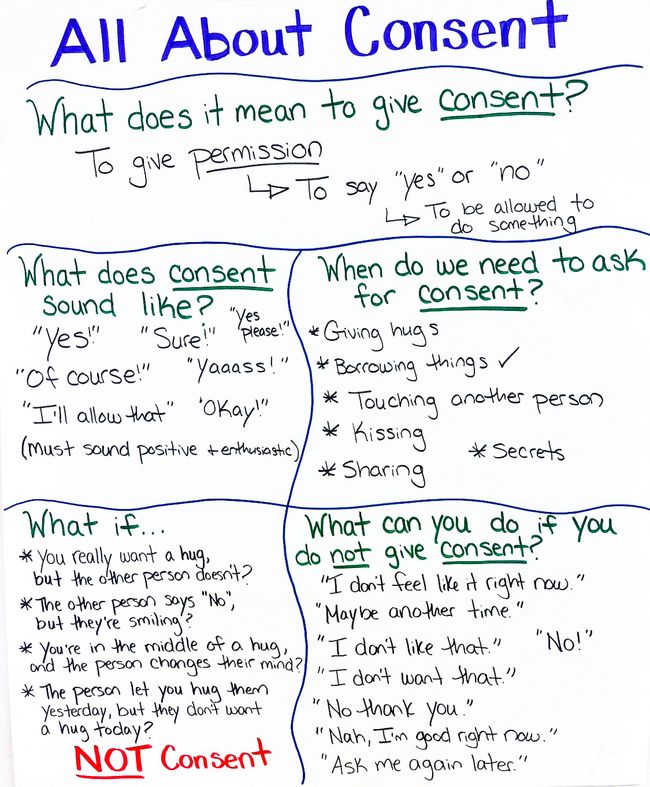
I'm wondering if this is a time to brush up on how we talk about and communicate consent related to our and our kids' space. If you've participated in Zoom worship or listened in afterwards in the past couple of weeks, you'll have heard Pastor Megan preaching the gospel of consent. Because for so long we've been podded with the same folks, we may have grown accustomed to knowing (or thinking we know) the desires and expectations of the people we're with. Now that we're venturing out into the world a little more, we need to negotiate, check in, test assumptions.

Practice helps! The other day on the way to meet up with a friend, my six-year-old was talking about what he was going to tell his friend. While not intentionally hurtful, what he was planning to share might not have gone over that well. I suggested an alternative, so did he. He tried out his new suggestion. We practiced. Having conversations about consent might also look like that: before an encounter, deciding what to say, how to say it in a sensitive way, trying out different ideas. Parents, we might also have to practice how to talk to other parents about our expectations.

Folks, I've shared it before (a long time ago) but it's worth sharing this chart from Liz Kleinrock, an educator and anti-bias, anti-racism trainer. So much of consent is about communication and respect, not just of another person's body but about their autonomy. May we all have both grace and respect for each other. And may this time of increased sensitivity to the vulnerability of others continue to live in us going forward.


Thursday, May 06, 2021

Police and Prisons, Our Kids and Ourselves


I got a new picture book this week: Milo Imagines the World, a collaboration between two of my favorites: author Matt de la Pena and illustrator Christian Robinson. In it, a kid named Milo and his sister are on a long ride on the subway. It's an opportunity for Milo to imagine and draw the lives of all the people he sees, including a boy about his own age. Readers discover that Milo and his sister - and the other boy - are on their way to a correctional facility, where they are going to visit their mom. The way that de la Pena gives language to the emotions that Milo is feeling is poetry ("These monthly subway rides are never ending, and as usual, Milo is a shook-up soda.) And Robinson brings life and not only to Milo, but to Milo's imagination.

Milo's journey to the prison is also a journey of realization. When he sees that the other little boy, who he had imagined as someone who's experience was very different from his own, is heading for the same destination he is, Milo understands that the way he imagines the people in the subway might be way off and the pictures he made of them might have been all wrong! Readers begin to see that the ideas that we have about people - including people in prison - might also be based on biases or false narratives. You can read more about Milo at Social Justice Books, or listen to Christian Robinson talk about the book and illustrations on Vimeo (4:33-10:28 are particularly relevant).

At the same time as I'm enjoying Milo, I'm also reading We Do This Till we Free Us, essays on abolition by Miriam Kaba (much more slowly than the rest of the church book group, though I'm grateful they still let me listen in). Kaba writes about seeking justice beyond prison and punishment, building community as an alternative to policing, and transforming how we deal with harm and accountability. I'm not the only adult right now who's beginning to get on board with the idea of police and prison abolition. This awakening in our country is also happening in our denomination. Y'all may already have heard of the curriculum on abolition that MCUSA has created to help churches explore this idea.

But what about kids? The prevailing narrative in dominant culture is that police are the 'good guys.' They are here to help and keep everyone safe. From Paw Patrol to Brooklyn 99 (two programs popular with the young people in my family) media reinforces this narrative. Cops might be goofy or bumbling but are ultimately well intentioned and uphold justice with care. White children especially, who may rarely have had an encounter with police, don't have this narrative interrupted.

We know, though, that not every child does have life-experience to backs up the cultural narrative. Garfield Highschool teacher Jesse Hagopian tweeted last year about an assignment that his first grade son was asked to complete. The assignment invited students to read a page entitled "Police Protect Us" and then answer questions about the reading:

What are some of the things that police officers do? They pepper spray people like when they sprayed my dad.
Why do you think a police officer’s job is important? Nurses, doctors and ambulances are important, but not police!
What would be another good title for this story? Police don’t protect us.

In fact police had not protected this boy and his family. He and many other children have the experience that police threaten and/or do violence and harm to them and their communities.

In parallel to the dominant narrative about police being good, the narrative about prisons and the people in them is that the only reason people go to jail or to prison is that they're bad. Books like Milo make it clear that people in prison are loved and love others, have families, like to read stories and have dreams. They might be there because of limited choices, because they didn't have money to pay for representation or to pay bail, because of complications related to addiction - like illustrator Christian Robinson's own mom.

Milo Imagines the World is one of very few books that give children like Milo a mirror in which to see themselves and children like mine a window through which they can experience understanding and empathy. In addition to her writing and advocacy for and with adults, Kaba also wrote the picture book Missing Daddy because of her frustration finding materials that can help children deal with the “loss, grief, and trauma” of having a parent incarcerated. And there's a list of more books that address policing and prison at Social Justice Books which includes books for children as well as teens and adults.

Though I've been fumbling through attempting to interrupt the narrative about police in myself and my kids for awhile, I still find it helpful to hear new ideas. For example I found a post from the Oakland Public Library on Evaluating Children's Books about Police very helpful and applicable beyond just book and beyond just children. It offers language and questions to test when watching, reading or encountering other media. I also found the teaching guide created by Penguin Classroom helpful; the questions it asks of the books (it includes the author/illustrators other two collaborations as well) are questions we could ask of our own experiences and assumptions as well.

My learning curve now with myself and my family is in trying on ideas about alternatives to police and punishment. It's continuing to build alternatives to policing by creating stronger communities and connections, building empathy and resilience, practicing alternatives to punishment and adopting transformative practices in my own life. I look forward to our congregation continuing to deepen our understanding of the movement to abolish prison and policing.

I will certainly be engaging with the MCUSA curriculum and will likely adapt it to use with youth in fall or winter. I'd be curious if there are parents interested in working through it together with an eye toward how we talk to our children.If you are interested in practical alternatives to police and punishment you can use right now, check out Seattle Area Alternatives to Calling 911 and If You See Something, DO Something: 12 Things to do instead of calling the cops . May we all work together for a just peace!

Wednesday, November 04, 2020

We voted! Now what?


One of the fascinating things about having the classroom in my living room has been the window into what teachers and students talk about and how teachers are building a classroom culture and community. It's also been a huge learning experience for me in pedagogy. How do you respond to questions? How do you encourage taking turns? How do affirm ideas and encourage critical thinking.

This week and last, I've been listening in on the Southshore kindergarteners talking about voting and the election. They started with the book Grace for President, in which Grace notices that there are no women in the row of pictures of presidents, decides to run for president of her class and then shows her leadership ability through her contributions to her school and community.

The kindergarteners were encouraged to notice in the words and pictures the kind of person Grace is, what good leadership looks like, how her words matched her actions. In subsequent days their class moved on to comparing real life candidates. First for Washington's 37th district and then for president. She presented points of the candidates platforms and then the children were invited to think about who they would vote for. I appreciate the respect that our schools teachers have for children's opinions and the way they encourage them to say more, ask questions and challenge each other - even in kindergarten.

Two years ago I wrote about voting and the election with annoyance. I was annoyed both because at the time I couldn't vote and because I was frustrated with what I felt was the implication that voting is the only way one can participate in democracy or enact change. My opinion has changed somewhat - at least a little and at least in part because I can vote now - but I stand by a few of the things I said then.

What has changed in 2020 is that, yes I can vote now but also there truly is much more at stake. What hasn't changed is my understanding how much more there is to engaging in change for justice than voting. I think this is a message particularly important for children and youth to hear. After all, they can't vote. And yet their voices are so important to our communities. Even kindergarteners have opinions about what's important. And they can march and make signs and write reps and get educated and post to social media.

The other thing that hasn't changed and that will never change is that nationhood is not what defines us as followers of Jesus. And it's our desire for a just peace is rooted in the Biblical call to justice. And that something that none of our kids aren't going to get in their classrooms, no matter how well they're being formed as citizens.

It's up to us as families and as a church family to tell the stories of Jesus and other biblical characters who interrupted for the sake of justice: Jesus' crossing boundaries to sit with the woman at the well and telling stories of good Samaritans. Peter sharing God's love with the Ethiopian eunuch. The prophets demanding justice that rolls like water. Whatever this week brings, our work as citizens and as disciples continues in our families and in our communities. May God bless us in this holy calling.

Wednesday, September 30, 2020

Sex, Teens and Teens-to-be


Three years ago I taught the Our Whole Lives curriculum with our high school youth for the first time. OWL is the wholistic sexuality curriculum from the UCC and Unitarian traditions. It's one of the most fun times I've had with teens in our congregation. I was looking forward to having that experience again this year, but COVID got in the way of those plans. However, it's had thinking about teens and sexuality and I thought I'd share some resources for folks with teens or teens-to-be. It's never to early to start conversations about sexuality, bodies and relationships.

In my family we've always been pretty open about talking about sex and bodies with our kids. Sure it leads to slightly embarrassing moments when kids ask openly about body parts or share facts they know about genitals at the wrong time or with the wrong people. But for the most part, the more knowledge, vocabulary and self-awareness a child has the greater their safety and confidence in navigating relationships of all kinds and their ability to protect themself.

Communicating the right names for body parts helps children explain accurately when they've been hurt or are in pain. Communicating without shame or secrecy about body parts can protect children from predators. Communicating the facts about sexually transmitted infections, pregnancy, and the importance of how to have safer sex helps teens make informed decisions about their own bodies and well-being. Communicating to kids and teens the importance of consent and what it is and isn't, as well as the value and beauty of their bodies, creations of a loving God, we hope will help them see themselves as worthy of care and compassion.

You see how often I used the word 'communicating?' That really indicates how key communication is - in an ongoing way, no just as "the talk." So here are some resources. I tried to include a variety of resources that cover littles and middles and also stuff for teens and parents of teens.

The Birds and the Bees for Little Kids - This one is TOMORROW! so act fast if you're interested. There are also many other resources about talking to kids and teens about sexuality at the Birds and Bees and Kids website. Another very cool site with tips and videos and fun animations to help parents process how to talk about sex with kids is Amaze (older kids) and Amaze Junior (little kids)

NPR's Life Kit podcast has a couple of episodes about kids and sex. How to Talk to Children about Sex addresses conversations with kids before the onset of puberty. My biggest take-away (among many) was be brief, factual and loving when talking about sex with kids. What Your Teen Wishes You Knew About Sex Education is (as the title suggests) about the teens in your life. That one features sex educator and advocate Heather Corinna.

Corinna is the author of a couple of books. One is a graphic non-novel called Wait, What? features a group of friends talking to each other and the audience about bodies, sex and sexuality. She also wrote S.E.X.: The All-You-Need-To-Know Sexuality Guide to Get You Through Your Teens and Twenties. I haven't read this one yet, but based on the introduction and table of contents alone I'm looking forward to it. (I linked to Amazon so you can look inside, but I got my copy from bookshop.org)

Since you really don't want your tween or teen googling a sex thing they've heard about, I suggest showing them Scarleteen, the website developed by Corinna. It's very teen friendly with tons of articles and FAQ's on a huge variety of topics. Another good one is Sex Etc. I Wanna Know is another that's not quite as visually fun but does have a section specifically for parents. Honestly, as an old person, these websites are helpful just to keep up with what's important to teens and to see what kinds of questions they're asking.

The Great Conversations series of workshops for parents and their tweens about their changing bodies and what to expect from puberty are in person. But they're offered online for now. I found this really helpful a couple of years ago and I look forward to another round with my second kid. There are other great resources on this site as well.

God loves you and your kids and all of the bodies that God made. Whatever these conversations look like for you, may you experience God's presence with you and your children. Good luck!

Wednesday, April 29, 2020

Tantrums and Meltdowns and Grief


"She's having the tantrum you want to have."  This is the response of a grief specialist to parents who are trying to understand their preschooler's erratic behavior after a late-term miscarriage.  A death that they were grieving and coming to terms with as well as learning how to talk about with their living child.

This story is part an essay about children and grief in the book When Kids Ask Hard Questions: Faith Filled Answers for Tough Topics.*  I've been dipping in and out of this book for awhile, on topics ranging from bodies to money to race to relationships and a lot of ground in between.  I haven't finished it yet but the section on loss just seemed like the right thing to read after a long day and wakeful night.  A day and night after which I felt deeply the opening phrase.  Cause, yeah, I sure feel like hitting and screaming and I've done my share of crying.

There have been many times in the past couple of months (we're coming up on months already!) when I have watched my child melt down, and wanted to respond with empathy but could only offer my version of the tantrum which is to snap, or yell or issue an ultimatum.  And there have been times when I have been able to hold him and listen and take deep breaths together and move through it.  I can see how little control he has over anything - even less than usual - and how small his world has become.  He's grieving.  We all are.

"She's having the temper tantrum you want to have," we both took deep breaths. She was so right, and we had missed it.  Through her clinginess, outbursts, tears and emotion our daughter was exposing the emotional instability within out entire family. We all wanted to scream, we each needed to hold tight to one another in the middle of the night, and we - individually and collectively - felt compelled to cry out to anyone who would listen that life simply was not fair." 

The authors of the essays in this book are about the loss of people in their lives. Loss of a parent or spouse is a traumatic event for a family and it's not like what we're experiencing in this time of pandemic.  But we are experiencing loss: loss of friends, loss of activities we love, loss of control, expectation and hope.  And even if our children aren't feeling all those losses for themselves, they certainly can sense their parents and other adult's grief and anxiety.

Even though these essays were about grieving the loss of persons, there were a few pearls I found helpful.  Top of the heap was, it's okay to show your kids that you're grieving and to talk about why.  And the companion to this is to make sure you're taking care of yourself and your own emotions, have someone to talk to and process your own feelings.  That processing (not with your child!) might also help give you the language that will develop your child's vocabulary of emotions, which both they and you need to be able to communicate what you're feeling.

There are probably scores of books out there that deal with kids and loss - I actually have several picture books on my shelf - but I found it helpful the specifically faith-oriented way that I was continually reassured of that God's love endures.  That God too grieves with us.  That faith doesn't demand that we put on a happy face.  Thank God!

Parents, friends to children, you're doing a great job! Even when you feel like you're not.  This is a hard thing that we're doing.  Keep breathing and know your belovedness, your children's belovedness.  We're in it together somehow.
--
* Handily, when I went to the link above for the book, I found out it's currently on sale. Just sayin' :)

Wednesday, March 25, 2020

Shifting Ground and Grounding Rhythms

Do y'all know about the podcast 99% Invisible?  It  looks at elements in the designed world that we largely take for granted and tells stories about them.  This week's episode, "This is Chance" is about the 1964 Alaska earthquake and the voice one woman who kept her community grounded.  Genie Chance was the local 'newsgirl' and it was her presence on the airwaves of the one still-functioning, back-up-generator-powered radio station that held the community together and connected Alaska to the outside world.

I listened to this story about how the ground literally shifted and swayed and buckled under the feet of those Alaskans.as I was already thinking about the way the ground is shifting in a different way for us.  The terrain looks different each day and possibly each hour - more recently the stay-home order - and probably it will look different tomorrow again.  No one knows how long this will last or when the landscape of the corona curve will finally flatten. And at the same time, one day slides into the next as

I'm not one of those parents who has implemented a color coded schedule or rigorous expectations of my kids.  I don't even understand parents who are talking about 'homeschooling' right now.  I can barely figure out what my own work is supposed to be in this new way of doing business.  I printed an activity sheet today for my five-year-old and I'm pretty sure the older one is doing some assignments on Schoology.  But there's a lot of screen time.

And yet, while there's no magnetic schedule posted on the fridge, we do have a routine and we do have some expectations of what gets done around the house or academically before the TV gets turned on.  And there is comfort in routine and rhythms.  One benefit of all being at home is that we're actually eating our evening meal together every day - which because of my spouse's usual late work hours didn't always happen before.  I try to take breaks during the afternoon to scooter in the driveway with Orie or go for a walk with Naomi. 

There is comfort in rhythms, including spiritual rhythms.  I cite Traci Smith and her book Faithful Families often because it's such a wealth of simple and doable family spiritual practices (and 50% off the kindle edition right now). One practice that I liked for right now is "five minute sabbath" (or even one minute sabbath).  Sabbath as a spiritual practice is marking a particular day, year or time to return ourselves and our resources to God.  We think of Sabbath as Sunday - or perhaps another day of the week.  Pastor Megan talk regularly about her Friday Sabbath practice.

Traci Smith suggests a set-aside time within a day or within an hour.  She also suggests making note cards and choosing practices at random.  But whatever - I'll just suggest a couple I like and also one of my own that I found on my friend the internet.  One suggestion for a one-minute sabbath is: go outside.  Notice what the weather is like.  Breathe deeply and take note of the feel of the air in your lungs.  Another is a breath prayer with the phrase, "I breath in God's love." "I breathe out worry and fear." Especially good right now!  Breathe!

Here are a couple of Smith's five-minute sabbath suggestions: write someone a note or gratitude or appreciation; find a poetry book or keep Psalms handy, read and reflect on a poem or Psalm.  The one I've like recently is to pay attention to my senses and notice: five things I can see, four things I can hear, three things I can feel, two things I can smell, one thing I can taste. The thing I can taste is usually coffee.

These are practices that kids could easily be pulled into - especially the embodied practices. Surely y'all can come up with creative one-five minute mindfulness practices that would be meaningful to you or your family. I would love to hear the ways that you are creating rhythms and inviting the Spirit into your own and your families life.  Or maybe it's just too hard to think about anything so systematic.  I'm curious about that too. 

This is an earthquake we weren't expecting.  God is with us now in the upheaval and will be waiting for us when we come out the other side.
--
image from the 99PI website, "The largest landslide in Anchorage occurred between Point Woronzof and Fish Creek"

Wednesday, March 18, 2020

Apocalypse Vision

My seminary-educated spouse is always reminding anyone who mis-uses the word that "apocalypse" doesn't actually mean "end of the world." It means "vision" or "revelation." It's true! The book of Revelation begins, "The revelation [or vision] of Jesus Christ, which God gave to him to show his servants what must soon take place..."

I have had some very down moments in the past few days. Because it really does feel like the apocalypse - and I do mean that in the end-of-the-world sense, regardless of my own seminary education. It's not just the idea of bunkering at home for weeks or months - I can probably deal with that okay - but the weight of knowing how many livelihoods will be affected by the need to stay away from work, how many will succumb to illness, how many businesses will be shuttered, how many have no place where they can shelter in place.

Under the weight of all of the above I am truly seeking ways to find lightness and peace and clarity of vision - apocalypse! Our Lenten theme, "We want to see" feels so true to my lived experience at the moment. Fortunately the way I see people coming together in virtual space and reaching out across distance is beautiful and grace-filled. And I'm finding lots of online resources. In fact, if I let it, the tidal wave of resources itself might be a little weighty and overwhelming! I've tried to wade through the wave and collected some things for you.

In no particular order, here are a few resources to find spiritual grounding while isolated:

Illustrated Ministry - illustrated prayers for coloring. I'm all about color and creativity. As far as I'm concerned this could be a starting place for creating one's own illustrated prayers/scriptures. Illustrated Ministry is offering freebies each week if you go to their website and sign up. Just click on the banner right at the top of the main page.
(And for fun not-necessarily-spiritual doodling, Don't Let the Pigeon Drive the Bus author Mo Willems is doing "Lunch Time Doodles" everyday at 1:00 Eastern for you to visit his studio and doodle along with him. I plan on introducing my pigeon-lovin' 4-year-old to these tomorrow.)
Pray as You Go - an app and website with a daily prayer, reading and meditation - includes resources for kids. Let me know if you use it and like it, I've only dabbled.
Pandemic Hope - an 8 week daily reading and faith practice. It's meant for families but could be used individually. Practices include things like "write out the alphabet and add something to pray for that begins with each letter" and "Take turns telling your favorite joke and thank God for filling our mouths with laughter".
Breath Prayers - Sarah Bessey offers a structure for a centering prayer practice that begins with imagining a sanctuary space, spending time focused on breath with a phrase, and an ending blessing. Breath prayer is excellent for centering when feeling anxious because of how embodied it is. And it's simple enough for kids to be able to engage very easily. She includes multiple phrases to use in times of anxiety, for example, from Psalm 3 "[inhale] I do not fear, [exhale] for you are with me."
Lauryn Hill in Sister Act 2: Joyful Joyful 90's gospel style. I watched this movie so often in high school and it crossed my social media feed today. Be careful, if you are like me you will not be able to see the end because of how teary your eyes got. So. Much. Joy. I'm totally going to go back and watch the whole thing and share it with my child (it's streaming on Disney+)
The Brilliance: I first heard their music at youth convention three years ago as played by the worship musicians. The Gravity of Love started playing in my earphones accidentally as I was working on this and I will be listening to it on repeat all day. I love the whole album. May it be a blessing to you as well.
This is the gravity of love
Just as the moon follows the sun
You're all around me
You're holding everything
This is the hope of every land
Just as the universe expands
You're love is reaching
You're holding everything
-
Photo by Pablo Varela on Unsplash

Wednesday, March 11, 2020

Covid Creativity


I just got the email (and text and voicemail and a text from Naomi): Seattle Public Schools will be closed for two weeks. Our kids are going to be so stir-crazy, needing to move their bodies and engage their minds. Parents too! Especially if you're the one stuck at home or already working from home. At least in my house, we'll be right on top of each other.

Since we're already not meeting for worship or Sunday school it may help to have a few practices that you can teach your child or engage in yourself for the sake of your sanity and spiritual health.

Praying in Color - on Sunday in the 'Children's Time' during Zoom Church I did a demonstration of 'Praying in Color'. If you have trouble sitting still, if you like the idea of prayer but coming up with words is a struggle, if you like to doodle, this might be for you. In the photo above I've started with a lent template and used a word list from Faithful Families as my prompt. Below, Marlene Kropf shared a colored prayer that she did while sitting for a chemo treatment this week. If you're not yet a reader/writer it's okay to use colors and pictures to express your ideas and prayers.

Walking Prayer - Thank God (literally) we can still go outside! As you walk to the park or the playground or grocery store, verbalize blessings and thanks using the the people and place you pass as prompts: Thank you God for the blooming trees. Be our elderly neighbor. Protect the person being attended to by that ambulance!

Butterfly Meditation - This is particularly great for times of feeling anxious or worried or as a bedtime practice. It helps get in touch with the body and slow down both body and mind.

Butterfly Jar - I did the thing! I suggested it a few Midweek Messages ago - I ordered butterfly larvae (aka caterpillars) online. Although I thought they might even be dead when they arrived, the teeny tiny caterpillars are indeed now big, fat caterpillars and everyday we look to see if they've begun to spin cocoons. Surely we will be giving thanks for new life a few weeks from now.

Plant a Garden - or if you don't have a garden, plant some seeds or tend some plants. Give God thanks for the soil and the sun and the water. Then watch John Denver sing 'Inch By Inch' with some Muppets.

Family Devotions - Before you dismiss this one out of hand (like I basically do) listen, I grew up with family devotions every. single. night. It's just not realistic for my family schedule or configuration. But maybe once a week with the right resource? And maybe in place of church? The linked folder has a one-page resource for each week of the next few months based on the lectionary texts. Use it (or even just part of it) if it's helpful to you. Or use it as a springboard for your own ideas that fit your context.

Keep meeting people - lean on church community for support and spiritual companionship. As long as we keep following best practices and public health guidelines, small group of folks are still okay to gather if taking the proper precautions.


Tuesday, March 03, 2020

Take Care and Do Not Fear


I went into Bartell's this morning to see if they had any hand sanitizer. I was hoping to give one to Naomi to keep in her backpack. No surprise, they were all out. They were also all out of most soap, rubbing alcohol and Lysol. I could have panicked. But a) I think we actually have some with our travel supplies. And b) I trust the information out of the CDC. From them I understand that though we in Washington have been more affected than most states, the virus is still not widespread and that there are concrete and common sense steps I can still take to be precautious - with or without hand sanitizer.

I don't tend to be alarmist about things in general, and so it doesn't always occur to me that others may have anxieties about any given situation. But our children (never mind some of you!) may be feeling fearful or worried given the prevalence of Corona virus in the media and the urging we're all hearing to take those precautions in the link above. (Regarding media consumption, I found this twitter thread about mental wellbeing and constant news consumption to be interesting and helpful).

If you're kids are experiencing anxiety or even if they are wondering what the big deal is about Corona Virus and you want some tips on how to talk with them about it, The Substance Abuse and Mental Health Services Administration (SAMHSA) published a how-to. Children will exhibit their anxiety in a variety of ways depending on age and personality. Responding to children's anxiety is similar to responses in many other stressful situations. Be a good listener, allowing more time and attention and assurance than you otherwise might. Allow questions and provide honest answers but limit access to media. Encourage positive activities and tell stories about helping responses to the outbreak. You and your kids may be encouraged to know that children seem to less affected by the virus.

One positive story-telling opportunity from Menno Media is the book Don't Be Afraid: Stories of Christians in Times of Trouble. It's a book of stories by Rebecca Seilig and Cindy Snyder, telling of people responding with care in times of crisis and illness. It was written during the SARS outbreak but the story about a nurse and her family in Toronto seems like a scenario that could be happening here and now. You can download the whole book free at the link above or go directly to the story "Love Behind a Mask" about nurse Amanda and her experience with SARS.

Of course, please care for your own mental and physical health! You are welcome to check out theses tips from the World Health Organization and (SAMHSA).

Be well, community. Take care of yourselves and each other. You are beloved.

Thursday, February 20, 2020

Fertile Soil and Growing Light


In these clear, bright days I have been extra attuned to the beauty of the growing light. We're about to enter the season of Lent. Like Advent it's a season of anticipation. But unlike Advent which heads steadily into darkness, Lent anticipates new life and the light grows. It is also a time of waiting readiness. Under the dark soil, seeds are being germinated and prepared, inside the buds, trees ready themselves to bloom.

In worship this season, we're using the theme "I want to see," acknowledging the difficulty in following through on Jesus' message and the gap in our understanding of what we're really supposed to do as disciples. As the adults in the lives of young people we're not only trying to be disciples ourselves, we have this extra responsibility (if we take it on) of bringing the kids in our lives along on the Jesus road. During the time of growing light, we're praying that the light may grow in us too. During this time of fertile germination, we pray that moments of clarity might bloom.

I wonder Lent gives us some opportunities for introducing faith formation practices into our homes and to our children. Seasonal practices can be times to say, "Let's try this thing for a few weeks as we wait for Easter." I know lots of adults who give something up for Lent - the practice of fasting intended to make space in our spirit for a depth of connection with our Creator. But giving up food isn't necessarily going to be a fruitful practice for a little one - or for a family to practice together.

Last year for a time I tried prayer cards with dinner prayers and psalms. It worked for awhile until the cards became a source of conflict - who gets to pick the card, which color we'd read, etc. This year I'm going to try again with beloved Bible texts - especially prophetic and hope-filled verses that have helped me to remember the coming newness of life, and which I hope my children will also learn to know.

Here are a few other suggestions for practices for Lent. Maybe some of them will resonate or be adaptable for your family.

Reading together: In her book Faith at Home: A Handbook for Cautiously Christian Parents, Wendy Claire Barrie suggests a family read-aloud, choosing a book with spiritual resonance like The Lion, The Witch and the Wardrobe or A Wrinkle in Time. I remember my mind being blown as a pre-teen when I began to see the Biblical story in the story of Aslan and the Pevensies in C.S. Lewis's book.

Planting Seeds: If you're a gardener who starts their own seeds, now is a great time to start plants and to use that opportunity to talk about new life. Lacy Finn Borgo and Ben Barczi in Good Dirt: Lent, Holy Week and Eastertide suggest planting a seed next to the side of a clear cup, so that you can see the roots grow and change. Each time the seeds is watered and observed is a time to remember the way we are 'watered' and nurtured through a relationship with God.

Grow a Butterfly: Borgo and Barczi also suggest ordering a butterfly kit to see the growth and transformation of caterpillar to butterfly in real time. A butterfly emerging from a cocoon is a beautiful way to draw a parallel to the coming story of Easter and resurrection. This seems like a very cool project and I think I'm going to try it! The authors suggest Carolina Biological Supply but I'm sure there are plenty of other suppliers if you Google.

Collecting an offering: Almsgiving (along with fasting and prayer) is one of the 'Three Pillars of Lent' A Catholic family I know keeps a collection box on their table which they fill through the season for a church relief organization. As a family you could choose either a local organization or food bank or an international organization like Mennonite Central Committee to collect for. Keep talking about why you're collecting and include them in your prayer if you pray together at meals.

I hope that whatever you decide to do (or not do!) during this coming season, you and your family will be filled with God's Spirit.

Monday, February 10, 2020

Faithful Parenting: Hopeful or Terrifying?


As I'm thinking about family faith formation, and meeting with many of you who live in households with children, I've been casting back to the work of Christian Smith, who's research over a decade ago showed that adolescents overwhelmingly mirror the religiosity of their parents. At that time he coined the term "Moralistic Therapeutic Deism" (MTD) to describe what he saw as a kind of functional religion he saw in many of the teens that he interviewed. It can be briefly summed up as a belief that a creator God exists who wants people to be good and nice and good people will go to heaven. There's no need for God to be involved in one’s life except if there's a particular problem. The central goal of life is to be happy and to feel good about oneself. Smith reflects in an interview at Crux, "there is obviously no Jesus here, no Gospel here, no transformation here. It is all about behaving well and feeling happy." He comes from a Catholic background but from a Mennonite perspective, there's also no discipleship, no justice, no servanthood. 

Recently Smith's current research and his book, Religious Parenting: Transmitting Faith and Values in Contemporary America has shifted away from the teens, who are absorbing MTD from what they observe in their parents, to the parents themselves. In the short interview with Smith, he talks about the just how parents can effectively create an environment and relationship that fosters faith formation in their children. I was particularly struck by this:
"Absolutely essential [is that] parents need to talk with their children about religion, not just once a week but regularly, during the week. Talking or not talking with children about religious matters during the week is one of the most powerful mechanisms for the success or failure of religious transmission to children. When parents never or rarely talk about their religion in personal terms, that sends a strong message to their kids that it’s really not that important."
I think this was especially resonant because I talked last week about modeling a life of faith and discipleship. Smith notes that practices alone are not enough. We also need to talk about the whys and hows of what we do when we go to church, pray, read scripture, gather in community, serve our neighbours and seek equity and justice. This, of course means figuring out for ourselves why we do it!

It is both terrifying and comforting to realize that our kids' formation is in our hands. I'm looking forward to reading Smith's book and (hopefully) feeling empowered to faith formation in my own family, and to pass along tools and information to y'all.